Brian Higgins interview (April 2010, PonyStep)
Posted at
11:58 AM,
13 April 2010
-


The webzine PonyStep has published an extensive interview with Xenomania's Brian Higgins, conducted by Andreas Soteriou. Read it here. A few highlights from the interview:
The current state of pop and the need to reinvent
«The world is pop mad now. (...) The ease for us to stand out is a lot harder now, so we have to re-appraise where we go sonically, which is fine. (...)
In 2001, when we emerged, pop music was on its backside and indie music was about to rise, through The Strokes and everything else. We were an independent company and we were as indie as the other bands around us. (...) The difference was that we didn't sing our own songs and loved female vocals. It was easy for us to stand out (...), to dominate and dictate. All we had to do was make sure that every time we worked with either of the two girl groups that we had [Sugababes and Girls Aloud], that we didn't ruin it or cock it up. We took it so seriously, it was life or death because we knew that if we let it go with either Sugababes or Girls Aloud, there wasn't an obvious replacement because we were surrounded by a sea of bands.»
The (uncertain) future of the Girls Aloud/Xenomania partnership
«Obviously that the rise of Cheryl Cole as a superstar is a phenomenon in itself, which is great for her. I think that everyone's got to wait and see where that takes Cheryl because it is obviously profoundly altering her life and how she sees her life. If she goes to America and does X-Factor and everything, then that is going to create a situation. They are all creating solo records, therefore they're all working with lots of other producers and stuff. It would be foolish for me to sit here and say that in a year's time, they'll definitely come back to us. (...)
I guess there's three options, really; They will come back, they won't full stop or they'll be back and work with other people. I have a completely open mind to the way that is. I certainly don't think that we have any ownership over them or anything like that. (...)
If the band continues it will be a small miracle, but then, every album was for me anyway. That's why we put so much into it, because we couldn't believe that they'd come back to us. We never assumed they would, ever.»
The early years of Girls Aloud
 «We initially only did two songs on the original Girls Aloud album; Sound of the Underground and No Good Advice, then I heard the other ten tracks and said, "This is a disaster". (...) «We initially only did two songs on the original Girls Aloud album; Sound of the Underground and No Good Advice, then I heard the other ten tracks and said, "This is a disaster". (...)
They'd sent them off to these other Swedish guys and different people in the UK who were about to be rubbed out by what was coming - the rise of indie and our sort of pop. I heard this stuff coming back and I said, "There are two completely separate groups on this record. We need to get rid of six tracks and I'll replace them". We did that and allowed the album to stand up as a body of work. (...)
When the second album came round, the label said, 'Listen, we're not going to do this group any more if you don't do it". I think my initial reaction was to do a few tracks and he said, "No, you have to do this because I think you're the only person who understands exactly what it is". So, that's how we took it on.»
Girls Aloud weren't accepted but gave two fingers up to everybody
«'Sexy! No, No, No' sounded ridiculously challenging because we thought that radio wasn't going to play them anyway. It was like two fingers up to everybody. You're not going to play them on the radio, anyway, so we'll give you something that you couldn't play. (...)
[Girls Aloud] loved the hostility that was in all their records because they realised that they weren't accepted. At TV studios, always treated really badly, unmanaged for years, having to do it all themselves. There is a great book in the Girls Aloud story, really. There is so much that people just don't know, about how much they were shunned at the start. We loved working with them, loved them as girls and their voices. They met a group of people that wanted to make a statement musically more than they wanted to make money. If we made the right statement and it was melodically as good as possible, then something good would come from that. (...)
We’re lucky in the sense that we met a group that had various voices within it that could really inspire excellent records, and they met people that were obsessed about wanting to have an expression through pop music that was as avant-garde as it was commercial, looking to combine those two things.»
The Xenomania set-up
«We're a fairly small group of people here. If ever we feel that there is a lot of thinking to be done, we contract people. In 2006, Xenomania was four people. Writing Sweet About Me, Call the Shots, Something Kinda Ooooh, there were just four of us. Then we sold a load of records and expanded, signed some acts and expanded again. It is a bit like a squeezebox, really. It opens and contracts accordingly, it doesn't show off by its size. There are eight people and some specialists that come in every now and again. I think we need to be that size.»
Between rural Kent and industrial Shoreditch
«I‘ve never lived in London and never wanted to live in London. Although, I‘m probably closer to feeling more comfortable living there than I have ever done before because of the place we have in Shoreditch. There is a big studio there and a big flat so I‘m going to probably live there maybe a few days a week and then live here for the rest of the time. Split myself between Shoreditch and the countryside. I like Shoreditch because it is like a Northern town, very industrial. It is like a town, so I don’t feel like I am in a city and I like that, because I don’t like cities very much.»
Building an online presence for new acts
«It’s no surprise that Ellie Goulding has got off to the quickest start this year, because she did the most work online last year, all the pre-label work, if you like. (...) I think she is a very good example of what needs to happen before you go on, you have to build it properly. The artist needs to be hands-on in doing that. (...)
If I’d known then what I know now, I would have added a full online presence with Alex [Gardner], any number of different releases out into the marketplace prior to going anywhere near a label, so that there was a very healthy underground aspect and online presence for that artist and I didn’t do that, because I didn’t believe I needed to. (...) If you service a record to Radio 1, the minute you go in with it, they’re on Google, looking to see what the online presence is. They are now using that as a determination of how hip or cool something is. Regardless of the quality of the record or the act, if that presence isn’t there, they will not play the record. It is basically making it clear that if you haven’t built up the online work through the blogs and with Facebook fans, Twitter fans, then you can forget about it, unfortunately.»
 Florrie Arnold Florrie Arnold
«Florrie is interesting. I took her out of our group. She is not signed to a major label. She has got the majors trying to sign her, but I think that we have to build her world online. We're not signing her to a label, which I think is really important. Because the minute she is signed, someone on high will say, "Right, ready or not, let's get her on a schedule", and that isn't working. I think she is amazing, she has got a great story. She is only twenty, was a fantastic session drummer for us and then there was her emergence as a singer. She has got amazing things going on in her life.»
Stepping outside of the "Xenomania sound"
«I guess whenever we have stepped outside of whatever people consider to be our sound, which is uptempo, electronic, exciting, imaginative and enthusiastic (...) lyrically interesting, original, with a shock in it somewhere, you won't know what it's going to sound like before you put it on... If ever we have stepped outside of that, it hasn't worked. 'Sweet About Me' wasn't your typical Xenomania record, and that was a huge worldwide hit, but I think that if you take the Rexola sound away from it, then it isn't successful. It needed that sort of thing to allow it to sink in to people's psyche and then they were able to judge it as a record as opposed to a Xenomania record first. I think that Vagabond was way outside what we would normally do because the guy's voice lead me into that particular area. I think that the truth of it is that it's probably a lesson in everybody sticking to what they're really good at, as opposed to doing things competently, because competently isn't going to get you anywhere. We're lucky in that we've found an area of music that we cen excel in, or call our own and I guess that's where we should stay. Naturally, sometimes we go outside of that, but it doesn't seem to work very often.»
What went wrong with Vagabond
«If you look at Vagabond in the context of the single 'Don't Wanna Run No More', it's a good song, a very good song and a decent record and everything else, but it's not brilliant. It's not vital or unique or standalone. When we were actually looking at the record and seeing that it was going to struggle, it didn't sound remotely like anything else around it at that time, but it certainly wasn't leading anything else. As a result of that, it was a record that didn't make a connection with anybody. We have to accept that part of our job here is to connect with people. And if we're not doing that, it doesn't matter how good the record is, then we're not doing it right. Our other choice is to blame everyone else that the records aren't connecting and I think that 's a waste of time.»
Collaborating and creatively debating with the Pet Shop Boys
«I thought that they would be hard work. I won't compromise on what I'm doing. I won't water it down and I won't dilute it, because that defeats the object of working with me in the first place, really. I don't like collaborating unless I am in charge of the collaboration. (...)
Neil told me that they very wilfully checked their egos in every morning they came into the studio because they decided that they were going to trust me to do it. I would say that 98 per cent of the time that worked and the two per cent that it didn't were natural creative debates, really, between me and Neil, with Chris acting as mediator, "Break it up, lads. Break it up!" (Laughs). That was fine. Neil is ever so bright and visionary and all those things. We sort of worked out the rules of engagement before we made the record and then were able to make it well. And they came in with a lot of really good material that I liked, as well.»
The end of the decade and the future of Xenomania
 «It was an amazing ten years, an incredible period, but I think it is over. And I think the fact that we were able to end the decade with a hit that was very like us in “I Left My Heart in Tokyo” is fine, a really good thing. (...) «It was an amazing ten years, an incredible period, but I think it is over. And I think the fact that we were able to end the decade with a hit that was very like us in “I Left My Heart in Tokyo” is fine, a really good thing. (...)
It feels like we've come back to how we started in a way. Putting remixes out and watching them go up the charts. It feels like I'm back there again in a funny sort of way. I've been working with Kylie, Alesha... Nadine's been coming in, so its not like I'm not active in the world of trying to create mainstream hits. It's just that I feel like I need challenges and I find them in tough situations. Looking for adversity, in a way. (...)
I think that everything needs to be thirty per cent better now if you want to even consider having a similar level of success. I think for myself and Miranda, that our average songwriting has to increase by thirty per cent within the next 5 years. We have to get back to audacity within our records and making statements and all the things that we are used to doing, I suppose. Challenging things.»Labels: Brian Higgins, interviews, pictures
Xenomania - THE X FACTOR
(Q magazine article, October 2009)
Posted at
12:01 AM,
02 September 2009
-
Written by: Johnny Davis
Published: Q (October 2009)
In a Kent country house, Britain's pop factory cranks out hits for Girls Aloud, Kylie, and many, many more. Clock on at Xenomania - the "21st-century Motown"...
 A Xenomania meeting in progress A Xenomania meeting in progress
 | | Mini Viva rehearsing at Xenomania |
"It was a bit weird," confirms 20-year-old Frankee Connolly, one half of Mini Viva. "They told us we were being taken to a studio, but when we got there it was just a big house". "We could", suggests her partner Britt Love, also 20, darkly, "have been going to anyone's house, really."
The pair met in 2007 at an audition held by a record label calling itself Select Music UK. Connolly had been targeted via her MySpace; Love showed up "after I'd seen a flyer". Soon they were driven to a house in Kent. "We came in and we were, like, Oh My God," recalls Connolly. "Seeing all the gold records on the wall!"
They spent the next two years training to be pop stars. This May they found themselves in the seventh-floor boardroom of Universal Music Group International's base in London. Their audience: Lucian Grainge, Universal's chairman and CEO, and arguably the most powerful executive in the British music industry. It was 11am and Grainge was eating muesli. But they stormed through Left My Heart In Tokyo and Mini Viva had a deal confirmed before Grainge had time to down his spoon.
Six weeks later Mini Viva are sitting in the garden of that same Kent house. It belongs to Brian Higgins, co-director of Xenomania, the most successful songwriting and production house Britain has produced in 20 years. From here Xenomania have written, recorded and produced 20 of Girls Aloud's record-breaking run of 21 singles. They have proved hitmakers for the Sugababes, Kylie, Pet Shop Boys and more, shifting some 25 million records in their 12-year history. Their songs are defined by a compulsion to corral pop music down ever more thrilling and creative avenues. Sugababes' Round Round or Girls Aloud's The Promise crossed dancefloor electronics with rock club guitars, classic '60s songwriting and sparkling '00s production.
Lyrically, too, Xenomania patented their own lines in winningly impenetrable silliness ("Something kinda ooh/Jumping on my tutu"), so much so that one journalist was compelled to ask Cheryl Cole whether 2004 hit The Show was about anal sex (it wasn't). Aided by five winning personalities, it was songcraft that escorted Girls Aloud from the nadir of credibility (winners of 2002 proto-X-Factor, Popstars: The Rivals) to somewhere near its zenith (two 2009 Brit Award nominations, Wembley Stadium gigs with Jay-Z and Coldplay).
 Xenomania: Nick Coler, Miranda Cooper and Brian Higgins Xenomania: Nick Coler, Miranda Cooper and Brian Higgins
 | Xenomania wall
|
Reliably dazzling yet never the same, Xenomania's services are understandably in demand. Their autumn schedule includes Cheryl Cole's solo album (co-produced with Will.i.am), Kylie's latest and the first material from Magistrates, the fashionably tipped Essex four-piece signed to The White Stripes' label XL. "At the moment there are 17 named artists we are being asked to consider," says the 42-year-old Higgins. "For us to accept any of them, it's really got to excite us a hell of a lot. We must not be caught putting out bad records."
The way Xenomania work is unusual. Based 45 minutes outside London "to avoid all the distractions", the team would never do anything as straightforward as sit down to write "a song". Instead they each work on backing tracks, chords or beats, Higgins choosing the best bits and building up songs like jigsaws. Xenomania believes that for a song to be "sincere", the artist must always be involved, so melodies and lyrics are always collaborative. Higgins: "The melodic side, which is about life, is the essence of songwriting. There's not many 17-year-olds who have Number 1 hits. If you're giving a melody to them to tell their life story through that melody, you've effectively given them the experience of the older person."
Higgins and Xenomania have already achieved success that would seem more than enough for most people. But it would be a terrible mistake to consider Higgins and Xenomania most people. "Presidents of labels go, Why haven't you retired yet?", he barks. "You think, is that what you're in it for? That's surely indicative of what they themselves are chasing. It's not someone who loves music. It's someone who wants overnight success. Well, I don't want to work with people like that. If you're searching fr overnight success, then get the fuck out of the business."
Xenomania are playing a long game, the next stage of which is to "bypass the nonsense" of the industry by launching their own record label. Aiming to become, as the team's head of A&R Sheila Burgel puts it, "a Motown of the 21st-century", Higgins's team have spent the last two years scouring the world for acts to develop. Turning the traditional pop producer's role on its head, Xenomania won't wait for record companies to bring them artists to work with. Instead, they'll sell record companies the artists they've discovered and developed.
That means presenting them "99 per cent complete", with a finished album with its first three singles earmarked, pre-style, rigorously drilled in performing live (50 shows for all new acts is now a ballpark figure) and, in Mini Viva's case, with their own brand of so-bad-it's-brilliant synchronised dancing. "I don't think record labels have the skill set to develop acts any more", says Higgins. "You need to be outside of it."
And if Xenomania's USP has thus far largely been girl pop, the next six months will see them comprehensively edging out of whatever remaining comfort zone they have left. Following Mini Viva, there'll be Vagabond (lusty soul-rock band), Pageboy (Pink-esque pop), Alex Gardner (groove-based blue-eyed rock), Nite Visions (the sons of Duran Duran's Andy and Roger Taylor, and sounding like it) and Gerard O'Connell (who'll release his music, a sort of four-to-the-floor Coldplay, under the name of Goldmark). This comes at a time when pop is once again in the ascendant; the days of Dizzee Rascal's Holiday and Lady GaGa's Paparazzi.
"Pop was a dirty word", says Radio 1's George Ergatoudis, whose swap of indie Jo Whiley for poppy Fearne Cotton perhaps signals a subtle station repositioning." But quality, exciting pop music sounds fresh now. Xenomania are doing it."
 The Xenomania house The Xenomania house
Alice Liddell, the inspiration for Alice's Adventures in Wonderland, used to live here. A team of gardeners are attending to the not-insubstantial garden. There's a stream, and ducks everywhere. "There only used to be two", notes Florrie Arnold, one of two impossibly beautiful girls who float to greet Q, "Now they're breeding like rabbits."
At 20, Arnold turns out to be one of the grizzled old hands - a member of Xenomania's house band. Elsewhere teenagers sit around a wooden hall table, playing back music on MacBooks, writing lyrics in notebooks, and generally being so good-looking you feel like running screaming out the back door.
The house is a hive of activity. An east wing is off-bounds - Higgins's living quarters, with long-term partner Sarah ("I've no idea why it says 'danger' on the door," notes Arnold.) "We're churning out ideas all the time," says Nick Coler, who is currently "trying to get some beats together" for an undetermined artist for the St Trinian's II: The Legend of Fritton's Gold soundtrack. "You're trying to sell someone a feeling, and that's the feeling you're trying to get," he says. "It's easy to make something catchy. To be able to listen to it a thousand times, and still have that feeling - that's hard."
 | Boys in the attic:
Jason Resch & Kieran Jones |
Elsewhere, house band members Jason Resch, 20, and Kieran Jones, 19, also known as JFK, are working on potential backing tracks for the same song, Tim Powell is tweaking mixes of Alex Gardner's music and Fred Falke, the noted Parisian remixer, is tackling a song by 2008 X-Factor winner Alexandra Burke. (Q stumbles across Burke at one point, before being shooed away by Higgins.) Falke divides his time between his own Toulouse studio and here. "The couch is very comfortable", he says admiringly. "Ikea."
Given all this, it's perhaps no coincidence one of Girls Aloud's albums was called What Will The Neighbours Say?." The villagers have generally got used to it," says Kieran Jones. "Though some do stand on the green and just stare at the house. That's a bit disconcerting."
Soon, housekeeper Pilar has lunch ready. Catering for 36, it's a feast comprising roast pork, cod mignon, hazelnut and vegetable salad, cabbage, beetroot and roast potatoes. There's a minor surge kitchen-wards. "Can you wait till Brian comes in first?" advises his PA Claire, in a tone that suggests it would be a good idea.
Lean and gym-fit, in his leather jacket Brian Higgins might bear physical resemblance to a Formula 1-era Damon Hill, but in temperament he's more Sir Alan Sugar: famously hard to please. A "work obsessive-compulsive" he's made no bones about packing pop stars he can't get along with on the train back to London, expects 12-hour days from his team and cheerfully admits to "binning 90 per cent" of Xenomania's work in his quest for the perfect pop song.
Franz Ferdinand excitedly proclaimed working with Xenomania on their recent Tonight: Franz Ferdinand album would be "a music marriage made in heaven" only to abandon the sessions three months later. "It didn't really work," said singer Alex Kapranos.
"I think Brian liked Franz Ferdinand... on a personal level," says Pet Shop Boys' Neil Tennant, whose 2009 collaborative Xenomania album Yes proved more successful. "But he works you very hard. He's very headmaster-ly. The first time I worked with, Miranda [Cooper] said, Right, now we'll try that with a different melody. And write some new words. I was like, What?"
"And you get marked," notes Tennant's partner, Chris Lowe. "He puts stars by your work, and comments. It's ruthless. It's fantastic!"
His self-belief is certainly impressive. In February, he had the first six acts signed to Xenomania perform for an audience of music business heavyweights that included six label presidents, two chairmen, 10 Radio 1 producers and key journalists. "One of the presidents said to me afterwards, If you'd fucked that up, you would have been fucked, Brian," he says. "But to me it was logical: the quality was there. And," he grins, "everyone left wanting to buy something."
Higgins was born in Whitehaven, Cumbria, the second eldest of five siblings. His father was a GP, his mother an actress. Aged 20, he co-wrote the song that would become Cher's Believe. At that stage he was a sales director at magazine publishers Reed. At night, he'd start his second job, writing and remixing pop songs into the small hours.
Along with Tim Powell and Matt Gray, he wrote All I Wanna Do, a Number 4 hit in 1997 for Dannii Minogue. "That was my entry fee," Higgins says. Executives at Warners asked if he had anything good for Cher, then hankering after a pop-dance direction. He'd spent eight years sitting on just the thing. Believe went to Number 1 in 23 countries, sold 10 million copies and ensured Higgins would never have to do a day's work again - an unlikely scenario.
 | | Miranda Cooper & Brian Higgins |
He set up Xenomania - the opposite of xenophobia, apparently - recruiting Cooper with what would become a trademark, a "talent in spotting winners" in the strangest places. Cooper, daughter of a former director of royal jewellers Asprey, was employed as a backing dancer for Eurovision hopeful Gina G. Later, Higgins would recruit A&R Burgel from US publication Bust ("the magazine for women with something to get off their chests") after bonding with her over the finer points of Simone Jackson and Anita Harris on the Here Come The Girls: British Girl Singers Of The '60s compilation. "We agreed that we're on a mission to destroy mediocrity," Burgel says. "Those 'alright' records. Throw them in the bad category. It has to be brilliant, or nothing."
Xenomania set about mastering pop. "As far as songwriting's concerned, we're fucking scientists", says Higgins. "I went through the whole of The Beatles songbook once, playing the chords on my left hand and working out all the melodies on my right. I just don't think there's that level of analysis of melody and chordal structure anywhere else."
 | «Wake Me Up was a fucking brilliant pop record»
- Popjustice £20 music prize on Xenomania's wall
|
They struck gold with Girls Aloud. "I can still remember the girls' faces when we gave them [drum'n'bass/ surf guitar debut single] Sound Of The Underground," says Colin Barlow, now president of Geffen Records, then overseeing their label Polydor. "But coming from that TV show format, we wouldn't have got anywhere unless we'd taken a risk."
Over the last two years Higgins has "sunk hundreds of thousands of pounds" of his own money into the next stage - establishing Xenomania as a label.
After lunch, there are rehearsals, in 72 hours, Xenomania will host a room at the iTunes Live London Festival '09 in Camden. Alex Gardner's album isn't out until at least January 2010, but it's all part of a long-lead build up to launching Xenomania's acts; and generating as much industry and media anticipation as possible while simultaneously honing their live performance. Backed by the Xenomania house band, Pageboy's singer Brooke X romps through Heartbreak and Red Wine - a sultry pop-rock tune that lodges itself in your head.
The next day Q return to find Danish pop types Alphabeat in the hallway. Later Gerard O'Connell, Mini Viva and Jason Resch perform. Cooper and Higgins look on, the former bouncing on her hands, while Higgins stares ahead inscrutably.
"With this job, it's your life more than your job," says 19-year-old Alex Gardner, who'd come to London from Edinburgh to model before being earmarked by Burgel. "Everyone wants to make it work as best as possible for each other. It's like a big family." He's recently signed to Duffy's label A&M, with whom he's already drawing similarly "potentially massive" comparisons.
 | | Pageboy rehearsal |
Brooke X, on the other hand, caught Burgel's eye performing in a New York all-female Led Zeppelin tribute band - Lez Zeppelin. "Sheila emailed and asked if I wanted to come over to England," she explains. "I was, like, What's this? Who are Girls Aloud? Cher? OK, cool. But it's made me see how creative pop can be."
Can Xenomania become a Motown for the 21st century? In attempting to do so, they're diverging from their success with girl pop - which has upset some of their faithful fanbase.
"The hardcore Xenomania fans have been, What the hell is going on?", says Vagabond's singer Alex Vargas. "What is this Vagabond?"
In fact Higgins has already spent three years steering Vargas from dreams of becoming Robert Plant, into a more soulful direction. "That was a blow, but good in the long run. I was 18; slightly arrogant. Brian showed me that melody is the key to everything. I'm glad he pointed that out".
"What Brian is attempting is a big task," says Colin Barlow. "But I can't think of anyone else who could create something like that. With that work ethic, talent and passion, he has every chance."
Two days later, Alex Gardner is onstage at the iTunes night. It's a compelling four-song performance. Cooper, Burgel and Higgins stand directly in front of the stage, two of them dancing, Higgins standing stock still and mouthing every lyric. Afterwards Fred Falke is effusive. "How can you not enjoy it?", he beams. "You have to be deaf, dead or drunk."
Higgins is more cautious. "I'm standing here thinking of all the things that can be done better," he says. "But it's only his 25th performance."
Twenty-five more to go? "Something like that," he says. "We'll get there." Don't doubt it.Labels: Alex Gardner, Brian Higgins, Brooke X, Florrie Arnold, Fred Falke, interviews, JFK, Mini Viva, Miranda Cooper, Pageboy, pictures, Sheila Burgel
Pet Shop Boys diary @ Xenomania
Posted at
9:05 AM,
25 August 2009
-
The latest issue of Literally magazine (exclusive to members of the Pet Shop Boys Club) includes a diary written by Neil Tennant (with occasional comments by him and Chris Lowe). The diary follows the release of their latest album Yes, with details covering the period in which the album was written and recorded. A few excerpts from the time they spent at Xenomania (pictures taken by the Pet Shop Boys):
2008
April 22
Neil, Chris and Dave Dorrell go down to Westerham to meet Brian Higgins. Afterwards, get a lift to Oxted station and take train back.
May 13
 Lunch in the garden at Westerham with whole Xenomania team. Then Neil and Chris work with Brian Higgins and Miranda Cooper on melody and lyric ideas for songs based on Xenomania backing-tracks: "The loving kind", "The next big thing", "Random", "Where the wild things are". Lunch in the garden at Westerham with whole Xenomania team. Then Neil and Chris work with Brian Higgins and Miranda Cooper on melody and lyric ideas for songs based on Xenomania backing-tracks: "The loving kind", "The next big thing", "Random", "Where the wild things are".
Neil: There's a few Xenomania songs that weren't finished, or it was decided weren't good enough. I think "Random" was finished. The chorus goes: "I have nothing to say / but what I'm saying today / is just random". I imagine nothing will happen to it. The song I think is actually quite good is "The next big thing": "Something tells me baby you're the next big thing..."
May 14
While Brian Higgins collates previous day's ideas, Chris and Neil drive to Sevenoaks, walk in Knole Park. Back at studio, work with Brian and Miranda going through melody ideas from previous day.
May 15
Neil writes downstairs with Miranda for "Where the wild things are". Chris writes new melodies upstairs for "The way it used to be".
May 27
Back at Westerham. Work with Brian and Miranda on new songs. Miranda and Neil finish lyrics for "The loving kind" and "Random". Neil records vocals. Chris upstairs.
May 28
Miranda and Neil finish more lyrics for "Random". Neil records vocals on "The loving kind". Chris upstairs.
May 29
Miranda and Neil finish lyrics for "Where the wild things are". Neil records vocals for "Random" and "Where the wild things are". Chris upstairs.
May 30
Miranda and Neil write lyrics for "The way it used to be" and "The next big thing". Chris upstairs.
June 3
Neil sings vocals on "The way it used to be" and "The next big thing". Chris upstairs.
June 4
Miranda and Neil work on lyrics for new track, "Love etc.". Chris upstairs.
Chris: I went upstairs and wrote melodies on Xenomania's backing tracks, some of which haven't been used by anyone so they must still be lurking around. I was in the red room, I think. Actually sometimes I was in Nick Coler's room, which might be the green room.
June 5
Chris and Neil visit Chartwell. Listen to comp of "Love etc.".
June 17
Back at Westerham. Work on "Love etc.". Miranda and Neil write new lyric for new song, "Revelation", based on "Where the wild things are" music. Neil sings vocals.
Neil: "Revelation" is what eventually becomes "More than a dream".
June 18
Work on structure and lyrics of "Love etc."
June 19
Work more on structure and lyrics of "Love etc.". Neil sings some alternative lyrics. Listened to work that's been done on "Did you see me coming?"
 July 1 July 1
Spent the day with Brian deciding which songs would go on the album: "Did you see me coming?", "Pandemonium", "Beautiful people", "Crying, not laughing", "Legacy", "The way it used to be", "Vulnerable", "King of Rome" (renamed from "King of pop"), "This used to be the future".
Chris: There were a couple of songs we didn't like, that weren't that great. But these discussions were always entertaining.
July 2
Work with Brian on structure of "Love etc.". In afternoon decide "Building a wall" should go on album. Work on structure of "More than a dream". Neil writes extra chorus lyrics for "Love etc.".
July 3
Neil sings chorus lyrics on "Love etc.". Chris works with Tim [Powell] on new version of "Building a wall". Neil writes new lyrics for it. Finalise structure and lyrics for "Love etc.".
July 15
Back at Westerham. Girls Aloud there. Record Carla [Marie Williams], an in-house singer, doing duet with Neil on "The way it used to be". Chris and Neil work with Tim on "Building a wall".
July 16
Back at Westerham. Brian plays through tracks that had been worked on; Neil and Chris make comments etc. Neil and Chris work with Nick on "Building a wall". Neil puts down new vocal melody.
July 28
Phil Oakey arrives at Westerham, sings vocals on "This used to be the future". Chris and Neil work with Tim on "The way it used to be".
July 29
Finish working with Tim on "The way it used to be". Chris starts working with Tim on "This used to be the future". Neil sings full vocal for "King of Rome".
July 30
Work more with Tim on "This used to be the future". Record some new lyrics for "The loving kind". Listen to "The way it used to be" for Brian's comments.
July 31
Work with Tim on "The way it used to be". After lunch, Neil, Chris, Brian and Tim travel, via Oxted station and Clapham Junction, to Matrix complex at Parson's Green, where Jeremy Wheatley (mixer) has his studio
September 15
Back at Westerham. Talk to Brian. Neil writes "More than a dream" lyrics with Miranda while Chris works on music with Tim. Put down guide vocals. Start working on "I'm not crying, I'm laughing". It becomes new song, "All over the world".
September 16
Work with Tim all day on "All over the world".
September 17
Work with Tim on "All over the world". Neil adds middle vocals. Then work on "King of Rome" and "Legacy".
September 25
Abbey Road. Orchestral session conducted by Andy Brown.
 September 30 September 30
Back at Westerham. Johnny Marr plays guitar, harmonica and tambourine on "Beautiful people", and guitar on "All over the world" and "Legacy".
October 1
Johnny plays guitar on "Building a wall", "Did you see me coming?", "More than a dream" and "Pandemonium".
October 2
Johnny plays acoustic guitar and harmonica on a Girls Aloud track. Start finalising mix of "Love etc." to be played at Parlophone 2009 presentation. Neil re-sings all vocals on "Legacy".
October 7
Chris works with Tim on "Building a wall". Neil does vocals with Matt [Tait] on "Building a wall" and "All over the world". Backing vocals recorded on "Beautiful people" with Jason [Resch] and Jessie [Malakouti].
October 8
Spent most of the day going through songs on the album determining what else needs to be done with Brian and Tim.
October 15
Work on "The way it used to be" structure, then "More than a dream".
October 16
Work on "Building a wall" and "This used to be the future".
October 22
Work on "Pandemonium". Record backing vocals with girls, then boys. Go upstairs to work with Tim on the track.
October 23
Work with Tim on "Pandemonium" track for most of the day. Neil changes some vocals on "King of Rome".
October 27
Nick records brass on "Pandemonium". Neil and Chris work with Tim on "King of Rome". Brian arrives and they finish structure of song. Chris and Tim work on "Pandemonium".
October 31
Back at Westerham. Worked with Tim on "Pandemonium" for most of the day, then on "King of Rome".
 November 26 November 26
Visit Jeremy Wheatley finishing mixes for album at Matrix studios. Make changes to mixes of all tracks except "Love etc.".
November 27
Matrix. Finish mixes of "Love etc." and "King of Rome", then make a running order.
Chris: We all had our running orders - me, Neil and Brian Higgins - and Angela had a point of view as well. I'd shoved all the mega-pop ones at the beginning. In the end it was a compromise. Neil wanted to start the album with "Legacy". It's bizarre that anyone would want to start the album with that...
December 3
Mastering of album.
December 8
Album playback at Abbey Road for record company etc.
December 10
Neil speaks to Brian on the phone about bonus "Dub" album.
2009
February 5
Back at Westerham. Work with Tim and Matt on dub mixes for bonus album.
February 9
Hear first play of "Love etc." on Radio 2.Labels: Pet Shop Boys, pictures
Xenomania in NME's Future 50
Posted at
4:40 PM,
16 August 2009
-
 Xenomania are included in this year's NME's "The Future 50" - a list that compiles the bands, artists and innovators driving music forward. Xenomania are included in this year's NME's "The Future 50" - a list that compiles the bands, artists and innovators driving music forward.
NME says: «At 49 is Xenomania, the production duo that have redefined the notion of pop through their work with Franz, Sugababes, Girls Aloud and many, many more.»
The list, which is topped by Animal Collective, was compiled by the magazine after polling their contributors and staff writers for acts who are driving the music scene forward and inspiring people.
(Former) NME editor Conor McNicholas declares that «the dominant of skinny-jean, vest-wearing jangly indie boys is coming to end». And indeed, the list does seem to be more pop-centric than one would expect.
View the full list here.Labels: pictures, Xenomania
Xenomania win Producer Of The Year
Posted at
1:39 PM,
09 April 2009
-
 Xenomania were named "Producer of the Year", as part of the 2009 Music Week Awards. Xenomania were named "Producer of the Year", as part of the 2009 Music Week Awards.
They were considered one of the "production outfits that have done more to define the sound of British pop over the past few years".
The Music Week Awards look to recognise excellence in the industry, encompassing retail, live, broadcasting, digital, marketing, promotions and PR. The award ceremony was held last night at London's Grosvenor House Hotel.
Click here to view the list of winners.

PRODUCER OF THE YEAR
Winner: Xenomania «There can be few production outfits that have done more to define the sound of British pop over the past few years than Brian Higgins and his writing and production team at Xenomania.
Since 2000, Xenomania has written, produced and remixed tracks for a string of successful artists including Sugababes, Sophie Ellis-Bextor, Dannii and Kylie Minogue plus Texas, defining a sound and style that brings with it almost guaranteed success.
According to Higgins, Xenomania is so named because it represents a "love of everything", and the outfit's production work certainly reflects that, incorporating a diverse range of influences and styles while retaining a distinctly ndividual and recognisable sound.
It is Xenomania's flagship artists however, Girl Aloud, with whom they are most commonly associated. Since their formation o the back of Popstars in 2002, Xenomania has written and produced for the group exclusively, playing a defining role in their success.
Girls Aloud's fith and most recent album, entitled Out Of Control, was released in November last year and has provided perhaps the greatest recognition of Xenomania's talents yet. The album debuted at number one on the UK charts with the first single The Promise topping the charts and giving the group their fourth number one. The single also helped the girls to their first Brit Award in the publicly voted Best Single category.
The Xenomania writing and production team includes Nick Coler, Giselle Sommerville, Miranda Cooper, Lisa Cowling, Tim Powell and Matt Gray, while their successes last year also took in Gabriella Cilmi and Alesha Dixon. The latest string to their bow is coming in the shape of Vagabond, the recent Geffen signing whose debut is due later this year.» Labels: awards, pictures, Xenomania
Miranda Cooper shows her wardrobe
Posted at
11:32 PM,
05 April 2009
-
Now here's something you don't see everyday. Xenomania's Miranda Cooper is featured in Show Me Your Wardrobe, a blog that takes a peak into the wardrobes of "today's creative talent".
View all pictures here.
.jpg) .jpg) Labels: Miranda Cooper, pictures
Miranda Cooper interview @ Tatler magazine
Posted at
12:01 PM,
28 January 2009
-
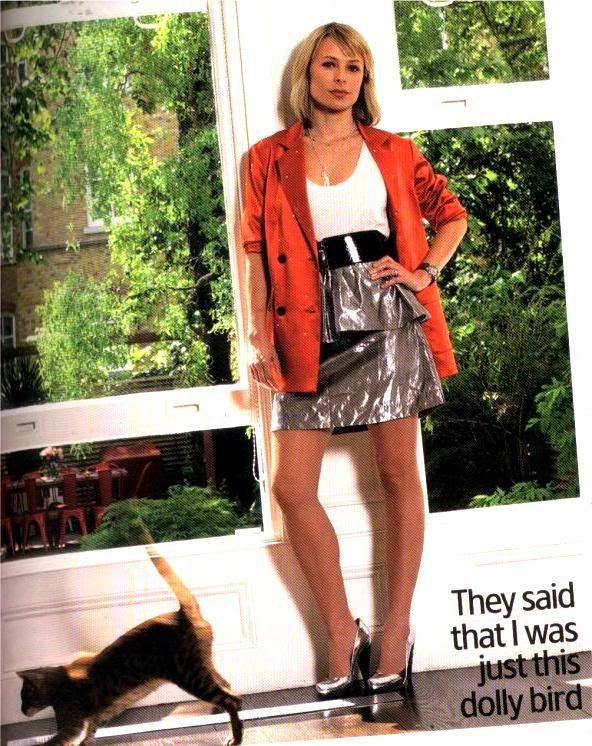 Miranda Cooper was interviewed for last August's edition of Tatler magazine. You can read the full interview here. Miranda Cooper was interviewed for last August's edition of Tatler magazine. You can read the full interview here.
A few things you may learn from the interview:
-- she is the daughter of a former director of royal jewellers Asprey;
-- she is married;
-- her sister Rebecca is an opera singer;
-- back when she was a dancer she was spotted by Dannii Minogue at a dance studio. Then she was in the 1996 Eurovision Song Contest as a backing dancer for Gina G;
-- after she stopped dancing, she went into TV presenting and then met Brian Higgins;
-- when Radio 1 saw her photos (as Moonbaby), in a jacuzzi with a bottle of champagne, they said: "Oh, she's some dolly bird, she hasn't written the stuff";
-- "Call The Shots" was written in Hôtel Costes in Paris and the Mondrian in LA;
-- Miranda says that Girls Aloud are Xenomania's muses: "We've covered practically every genre. I think they've had a musical education through us";
-- the "Xenomania ducks" are mallards. A few months ago there were only two: Edmund and Josephine. They have since multiplied.Labels: Girls Aloud, interviews, Miranda Cooper, pictures, press, Xenomania ducks
New Xenomania pictures
Posted at
5:58 PM,
26 October 2008
-
Neil Tennant posted a couple of pictures of "Xenomania people" on Pet Shop Boys' official site. On the afternoon of November 22nd, the band were recording backing vocals and taking pictures:
 That's Bob Stanley on the second picture, on the far left. That's Bob Stanley on the second picture, on the far left.
Jessie Malakouti has also been spending some time at Xenomania headquarters. Recently she posted a couple of pictures on her MySpace. That's Jason Resch (left) and Neil Tennant and Jessie, sharing headphones:

And here's Jessie with a happy-looking Brian Higgins, at Girls Aloud's birthday party, in Knightsbridge:
 Labels: Brian Higgins, Jason Resch, Jessie Malakouti, Kieran Jones, new acts, Pet Shop Boys, pictures, Saint Etienne, Sheila Burgel
Brian Higgins interview on Music Week
Posted at
9:12 AM,
02 October 2008
-
 Brian Higgins is interviewed by Music Week and reveals the "secrets" to Xenomania's success: Brian Higgins is interviewed by Music Week and reveals the "secrets" to Xenomania's success:
Develop long-lasting creative relationships… «I have great belief in the development of long-lasting creative relationships. I have been with Miranda Cooper for 11 years now, Tim Powell for 12 and Nick Coler for seven. We have a very strong bond and we fight very hard for each other. I think this helps us in the creative process and the inevitable ups and downs of the business.» …but keep relationships fresh «I spend time each year looking to freshen our relationships by signing hungry, ambitious writers and musicians. That is crucial, but I only want to work with people who feel they can give everything to what Xenomania is trying to achieve; I don’t think you can do that if you only visit every three months.» Don’t rest on your laurels «We are a very restless group of people. We rarely celebrate success, we just enormously enjoy working together. Invariably, when a record has come out and becomes a hit, we are too engrossed in the record we are currently making to really register anything but relief that the hit has been achieved. I should also point out that it is great fun and a real test.» Pan for gold «Myself, Tim and Nick tend to develop small musical ideas that I think are the acorns of hit records. I will have a lot of conviction in a tiny idea and that idea will be developed by all of us to the point where the melodic and lyrical work can really start on it. This is where Miranda’s genuine brilliance really comes into its own. The whole thing is then revisited on as many occasions as needed until there is enough material to make a hit record. It takes real conviction and mental strength to have hits year-in, year-out, so it is vital to only work with artists who are good enough to bring that level of commitment out of you. The better the artist, the harder you try and the more you will give of yourself. It’s a lesson we have painfully learned over the years.» Don’t copy other producers «Our sound is a mish-mash of lots of things. As a producer you can either say we are going to make a record just like X who is having a hit now or we can allow our natural influences to bubble up during the process, confident that at some stage the effort will pay off – this is the much more exciting way. We want to find something that is our own sound or unique to the artist. I think there are often many influences going on in our records but it is the hybrid that creates the originality.» Pop doesn’t have to be straightfoward «[Girls Aloud’s] Call The Shots is a fairly conventional pop song, with verse, chorus, verse, etc, as is Sound Of The Underground. The more complex side has just evolved as we have tried to make better records, but it is not something we feel compelled to do. [Sugababes’] Round Round is very odd; there is a tempo change and few repetitive melodies but that was still an international hit. At the time we thought we can do this our way and still be successful. If you listen to The Police and Bowie you realise that in a lot of their greatest hits the verse melodies never repeated.» Non-traditional structure has been done very successfully before, but you have to genuinely feel it. «From a pop perspective, some of our music over the years is odd when compared against traditional genre pop and I accept that, but when we made our breakthrough as producers in 2002, pop music was largely on its arse and the last thing it needed was another formulaic pop song or producer. Pop music needs sincerity and conviction. My own desire is to search for the middle ground where originality meets commerce: you cannot always achieve it, but we always set out to.» Avoid the formula at all costs «The only thing we have wilfully tried to achieve over the last six years is that none of the records ever repeat themselves. I accept that you cannot hide your identity from the records you make, but I reject completely the idea that you should roll out a formula sound for each artist you work with; that leads to shortened careers and burnout, or a collection of very dull records. I am determined to push for new, exciting ideas whenever possible.» In the end, it’s all about melody «I think that whatever scene is providing the best melodies, they are going to be enjoying the lion’s share of success. Over the last few years that has come through singer-songwriters and bands. Traditional pop had become a fat, bloated, lazy thing and was ready to be taken over. Now, however, how many indie bands sound the same or are struggling to come up with great melodies and lyrics? The idea that you judge a record’s quality on whether the artists are playing guitar or not is rubbish. The indie scene will eat itself too as the best of the writers may well have already come on through. In the end, only the best songs will survive, not the person who wore the tightest trousers. It is all about competing. We have to get out there and make people want what we do. We can only do that if our ideas are brilliant, competitive and recorded with sincerity. That is what the public can identify with. The public will buy sincerity.» Declare independence «To me, the idea is to try and create something original, or at least something with no current reference. That is it. I have got to put a flag in the sand and say, “This is what we stand for.” That will get up the noses of some people and I guess they won’t phone me, but if the alternative is to follow a prescribed creative process then so be it – I know myself well enough to say that if I followed the generic process demanded by some, I would deliver a shit record. Great music, great production and great A&R is sometimes all about risk taking – that’s the side of the business we want to in exist in. We have the desire to make something stand out from the crowd but be totally accessible at the same time. As a result of that, it is very difficult to prescribe how the record will be until it is actually finished. With [Girls Aloud’s] Love Machine, it ended up sounding like The Smiths bumping into The Sweet. I didn’t know it would turn out like that. We got the beat. Once that was right we set about it. The group was just singing against the beat and the bassline; it was a work in progress. For us, a song isn’t finished until it is finished. The way we work allows anything to get in there creatively right up until mastering. So I guess we do work in fragments. It can be slightly uncomfortable for artists, but I am always confident that we can make that record work in a final delivery situation. We don’t do demos as it were, the final version of the song is made on the hoof. It’s part of the challenge and is exciting. It is crucial to work with A&R people who complement and appreciate the way you work. Colin Barlow, Nick Gatfield and Darcus Beese are all very patient with me and are confident enough to see where our ideas will lead, without having to hear fully-formed masters. These are rare skills and I am lucky to work with those people.» Stay true to your musical heritage «[Sugababes’] Hole In The Head is quintessentially British and it was an international hit; Love Machine even more so, yet it was only a hit on these shores. The Girls Aloud records have, at times, been quite complex, but I think they needed their own unique sound in order to survive. The international success of [Gabriella Cilmi’s] Sweet About Me has been amazing and very deserved – Gaby is an outstanding artist and songwriter. It helps us feel that we are getting our sights in line with what we need to do to adapt our sound so that it will always have international appeal - we are consciously thinking about this now for the first time, but rather than fully change what we are, we know it’s time to adapt.» Labels: Brian Higgins, interviews, pictures, press
| |

 «We initially only did two songs on the original Girls Aloud album; Sound of the Underground and No Good Advice, then I heard the other ten tracks and said, "This is a disaster". (...)
 Florrie Arnold
 «It was an amazing ten years, an incredible period, but I think it is over. And I think the fact that we were able to end the decade with a hit that was very like us in “I Left My Heart in Tokyo” is fine, a really good thing. (...)


.jpg)
.jpg)